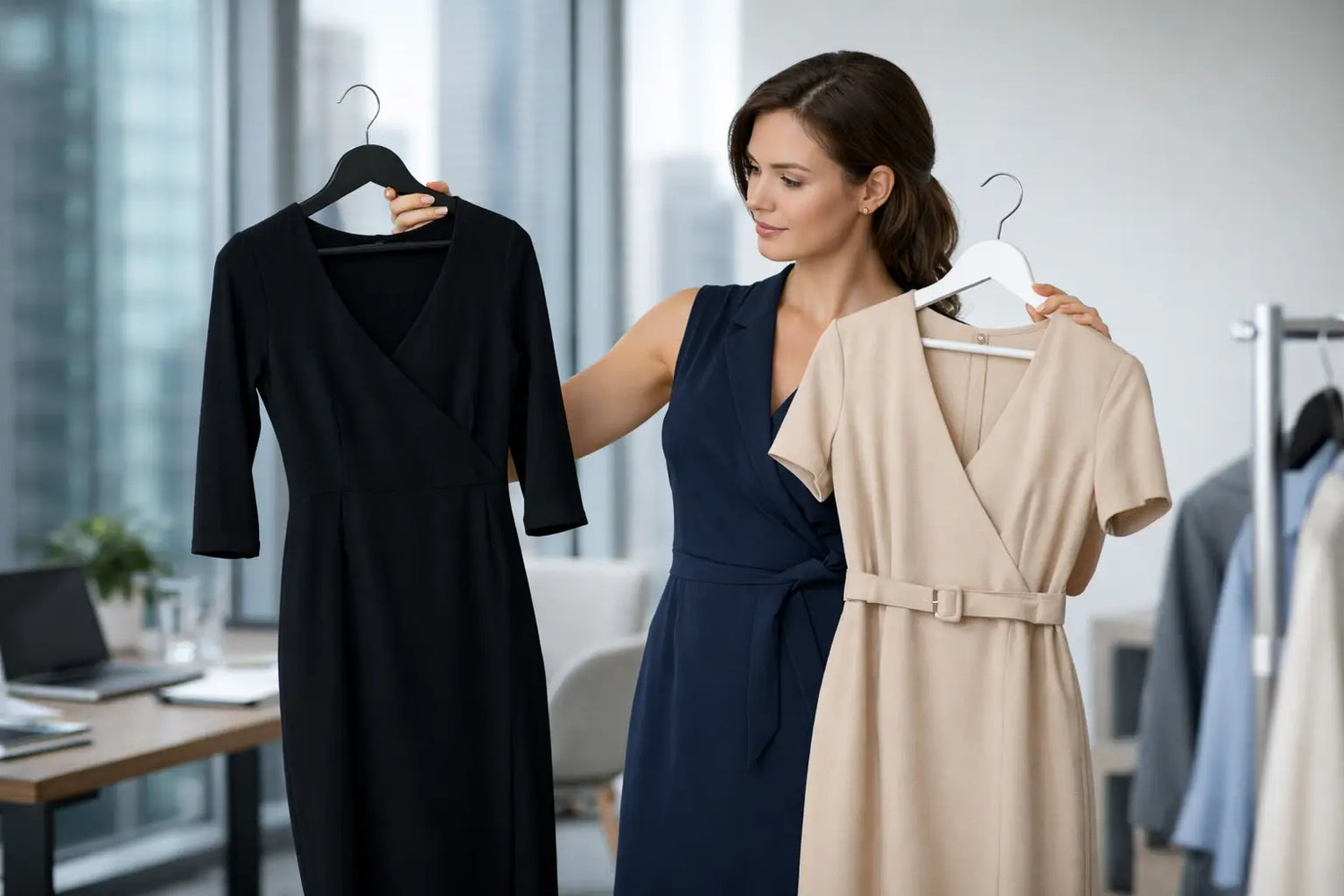
There’s a reason the midi dress for work keeps earning a permanent place in a polished wardrobe. It solves the morning question faster than separates, looks intentional with very little effort, and moves easily from desk hours to dinner plans. When the cut is right, it gives you presence without feeling overdone.
That balance is exactly what makes the midi length so useful. It feels more refined than a mini and less formal than a full-length dress, which gives it room to work across different offices, climates, and schedules. If your wardrobe needs pieces that look elevated but still make sense on a real weekday, this is one of the smartest categories to shop.
Why a midi dress for work makes sense
A good work wardrobe is not just about looking appropriate. It is about reducing friction. The best pieces let you get dressed quickly, feel confident all day, and adapt to changing plans without requiring a full outfit reset by 5 p.m.
A midi dress does that well because the silhouette is already complete. You are not matching a blouse to a trouser or second-guessing proportions with a blazer. The shape creates instant structure, and the hemline typically lands in a range that feels office-friendly while still flattering and modern.
It also works across dress codes better than many people expect. In a more conservative office, a long-sleeve midi shirt dress with closed-toe heels reads clean and professional. In a business-casual setting, a sleeveless knit midi dress paired with a lightweight layer can feel sharp without looking stiff. The category is broad enough to handle both.
What makes a midi dress work-appropriate
Not every midi dress belongs in a work rotation. Length alone is not enough. The difference usually comes down to fabric, fit, neckline, and how much visual attention the dress demands.
Start with structure
For work, a midi dress should hold its shape at least a little. That does not mean it needs to be rigid, but it should skim the body rather than cling to it. Tailored shirt dresses, wrap-inspired cuts, fit-and-flare silhouettes, and softly defined sheath styles tend to look the most polished.
If the fabric is too thin or overly bodycon, the dress can shift from sophisticated to distracting. On the other hand, if it is too stiff or heavy, it may feel formal in a way that limits versatility. The sweet spot is a fabric with drape and substance.
Necklines matter more than people think
A work-ready dress usually has a neckline that feels secure and balanced. Crew necks, square necks, collared styles, mock necks, and modest V-necks all tend to work well. Lower necklines are not automatically off-limits, but they often require more styling attention during a busy day.
The same logic applies to back details and slits. A front or side slit can make a midi dress easier to walk in, but it should not open too high when you sit. If you have to keep adjusting it, it is probably better saved for after-hours wear.
Print, color, and finish set the tone
Color influences how formal a midi dress feels. Black, navy, ivory, taupe, chocolate, olive, and soft gray almost always look grounded and expensive. Jewel tones can also work beautifully, especially in cleaner cuts. Bright prints are more situational. They can be great in creative offices or summer settings, but a quieter pattern usually gives you more repeat wear.
Hardware, buttons, ruching, and cutouts also change the message. For work, less is usually stronger. A dress does not need embellishment to feel elevated. Clean lines often look more confident.
The best fabrics for a midi dress for work
Fabric is where many shopping decisions go right or wrong. Photos may show a beautiful shape, but if the material wrinkles instantly, turns sheer in daylight, or feels synthetic in the wrong way, the dress will not earn real wardrobe mileage.
Crepe is one of the most reliable options because it drapes well and usually looks smooth through the day. Cotton blends are ideal if you want breathability and a crisp finish. Knit midis can be excellent for office-casual dressing, especially in ribbed or compact knits that skim rather than cling. Satin can work too, but it depends on the cut and the office. In some settings it reads elegant and modern. In others, it can feel too evening-leaning.
Season matters here. In warmer months, lightweight cotton, linen blends, and soft viscose can feel fresh and easy. In cooler weather, ponte, heavier knit blends, and brushed textures bring more structure. A dress that works all year is useful, but dresses that work especially well in one season often look better because the fabric is doing what it should.
Fit is what gives the look authority
The most stylish dress in your closet will still fall flat if the fit is off. For work, fit is not about wearing something tight. It is about making sure the proportions support your posture, movement, and confidence.
Shoulders should sit correctly. Waists should feel defined without pinching. The skirt should allow you to walk comfortably and sit without constant adjustment. If a midi hem hits an awkward point on your calf, the whole look can feel slightly off, even when everything else is right.
This is where personal height changes the equation. On a taller frame, a true midi may land below the calf and look especially elegant. On a petite frame, the same length can shorten the silhouette if the dress is too voluminous. That does not mean petites should avoid midi dresses. It simply means cleaner lines, a defined waist, and the right shoe become more important.
How to style it without overthinking it
The best styling choices support the dress instead of competing with it. For work, that usually means keeping the outfit focused and intentional.
A blazer is the easiest way to sharpen a midi dress. It adds structure and gives sleeveless or softer silhouettes more office range. Lightweight cardigans also work, but they create a gentler finish. If your office leans polished, a tailored blazer usually has more impact.
Shoes change the mood quickly. Pointed flats keep things sleek and practical. Loafers add a sharper, fashion-aware edge. Block heels are ideal when you want height without sacrificing comfort. Clean ankle boots can work in cooler months, especially with knit or long-sleeve midi dresses.
Accessories should feel selective. A structured bag, simple earrings, a watch, or one refined necklace is often enough. Too many extras can make a work dress feel styled for an occasion instead of a normal day.
When a midi dress may not be the right choice
Even a strong wardrobe staple has limits. In very formal corporate environments, some midi dresses can read too relaxed unless the cut is tailored and the styling is crisp. In highly casual workplaces, a more structured midi may feel dressier than necessary on certain days.
It also depends on your schedule. If your day includes commuting, long meetings, and constant movement, comfort becomes non-negotiable. A beautiful dress that restricts your stride or needs frequent adjustment is not practical, no matter how polished it looks.
This is why curation matters. A smaller wardrobe of well-chosen dresses usually outperforms a closet full of almost-right options. One or two pieces that fit beautifully, layer well, and hold up through repeat wear will do more for your work style than a stack of trend-driven choices that only work once.
Building a smarter rotation
If you want your wardrobe to feel easier, think in terms of roles rather than volume. One neutral midi dress for everyday office wear, one slightly softer or more fashion-forward option for lunches and client meetings, and one transitional piece that layers well through changing seasons can cover a surprising amount of ground.
That is where a curated approach feels different. Instead of shopping endlessly, you focus on silhouettes that already match how you live - polished, versatile, and ready for more than one setting. La Nivara is built around that kind of dressing: modern pieces that carry confidence without adding complication.
The right midi dress for work should make you feel collected the moment you put it on. Not costume-like. Not overly precious. Just clear, elegant, and ready for whatever the day asks of you. When a piece does that, getting dressed stops feeling like a task and starts feeling like part of your advantage.


Leave a comment
This site is protected by hCaptcha and the hCaptcha Privacy Policy and Terms of Service apply.