
A calendar can ask a lot from one outfit: a client meeting at 10, lunch across town, a last-minute dinner, then a flight the next morning. This guide to smart casual dressing is for the woman who wants to look considered through all of it, without changing clothes or overthinking every layer. The goal is not to appear overly formal. It is to create an easy sense of polish that feels current, feminine, and entirely your own.
What Smart Casual Dressing Actually Means
Smart casual sits in the space between relaxed everyday clothing and traditional office wear. It has the ease of casual style, but it is built with more intention: clean lines, refined fabrics, thoughtful proportions, and shoes or accessories that make the whole look feel finished.
The phrase can feel vague because it changes with the setting. A creative office may welcome wide-leg pants and a soft knit, while a restaurant or gallery opening might call for a sleek midi dress and a lightweight jacket. The common thread is not one fixed uniform. It is a polished balance. You should look comfortable, but never accidental.
A useful rule is to give every outfit one elevated element. That could be tailored pants, a structured jacket, a crisp shirt, an elegant belt, or a sophisticated shoe. When the rest of the look is simple, that one piece establishes presence.
Start With Shape, Not Trends
The fastest way to make smart casual dressing feel effortless is to begin with a silhouette that already works. Trends can add interest, but proportion does more for an outfit than a seasonal detail ever will.
Wide-leg pants are a strong foundation because they look relaxed while retaining a tailored feel. Pair them with a fitted knit, a tucked-in shirt, or a fluid blouse that gives the waist some definition. If your pants have volume, keep the top half more streamlined. If you choose a looser shirt, add shape with a half-tuck, a belt, or a more structured trouser.
Midi dresses offer another reliable starting point. A clean midi length moves easily from work to dinner, especially in a solid color, subtle print, or softly textured fabric. Add a cropped jacket or refined cardigan when you need a little coverage. The result is composed without feeling stiff.
Coordinated sets are especially useful when time is short. Matching pieces create a complete visual line before you have added a single accessory. A tailored vest and pants, a relaxed shirt and matching shorts, or a knit top with a coordinating skirt can be worn together for impact, then separated to create several more outfits. That versatility is what turns a beautiful purchase into a practical wardrobe decision.
The Fit Test That Matters
Smart casual clothes should allow you to move freely, sit comfortably, and feel like yourself. But ease should not become excess fabric in every direction. Check the shoulder line of jackets, the rise and drape of pants, and where a dress hits at the waist. Small fit details are often what separate an elevated outfit from one that feels unfinished.
If a piece is intentionally oversized, balance it with something closer to the body. An airy blazer works beautifully over a fitted tank and straight-leg pants. A flowing skirt feels modern with a neat knit or tucked blouse. Contrast creates clarity.
Build a Smart Casual Color Palette
A wardrobe with a focused color palette makes getting dressed faster and makes your outfits appear more considered. Start with versatile neutrals that suit your lifestyle: black, ivory, navy, chocolate, camel, soft gray, or stone. Then bring in two or three colors that make you feel energized, whether that is deep burgundy, butter yellow, forest green, powder blue, or a warm red.
You do not need to wear neutral colors all the time to look polished. A saturated dress can be just as smart casual as a black trouser, provided the cut and fabric feel refined. The difference is in restraint. Let a strong color be the focal point, then keep your shoes, bag, and outer layer clean and uncomplicated.
Monochrome dressing is a particularly effective option for busy days. Wearing tones from the same color family creates a long, uninterrupted line and gives relaxed pieces a more intentional feel. Try cream with oatmeal, chocolate with tan, or navy with soft blue. The shades do not need to match exactly. A little variation adds depth.
Choose Fabrics That Hold Their Own
Fabric has a quiet but immediate effect on how an outfit reads. Crisp cotton, smooth poplin, linen blends, refined knits, satin finishes, suiting fabrics, and substantial jersey tend to bring a smart edge to casual silhouettes. They hold their shape, drape well, or add subtle texture.
This does not mean every piece needs to be delicate or high-maintenance. Smart casual dressing has to work in real life. A wrinkle-prone linen shirt may be perfect for a coastal lunch or vacation day, but a fluid blend or polished knit may be the better choice for a long commute and a full day of meetings. Consider what your schedule asks of the outfit, not just how it looks in the mirror at home.
Avoid relying on overly distressed denim, thin jersey, or visibly worn basics when the dress code leans polished. Those pieces have a place, but they can make an otherwise elegant look feel too informal. If you wear denim, choose a clean wash with a structured shape and pair it with an elevated top, blazer, or pointed shoe.
The Pieces That Make Outfits Look Finished
The smartest wardrobe is not the largest one. It is a curated group of pieces that work in more than one setting. A few dependable categories can cover most smart casual plans:
- Tailored wide-leg or straight-leg pants in a versatile neutral
- A midi dress that can be layered with a jacket or knit
- A coordinated two-piece set that works together and separately
- A crisp shirt or polished blouse with an easy, flattering drape
- A lightweight jacket, blazer, or structured cardigan
- Refined flats, loafers, low heels, ankle boots, or clean minimal sneakers
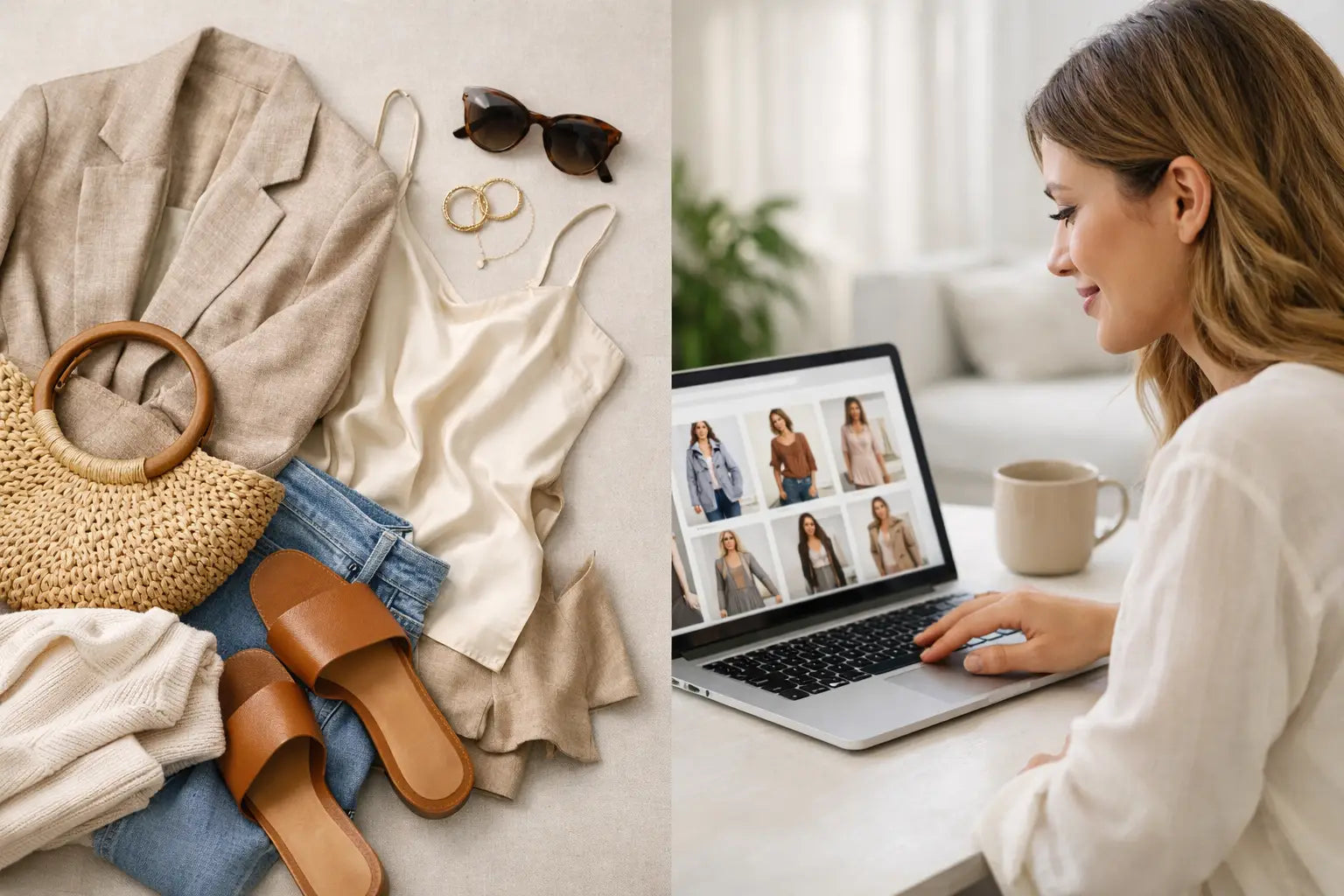
Accessories should support the outfit rather than compete with it. A structured bag, a sleek belt, simple gold-tone jewelry, or a pair of sculptural earrings can bring definition to a simple look. Choose one or two finishing details and stop there. Smart casual is confident because it does not try too hard.
How to Adapt Smart Casual for Real Plans
For the office, start with tailored pants, a blouse or fine knit, and a lightweight jacket. If your workplace is more relaxed, a clean pair of dark denim can replace the pants, but keep the top and shoes polished. A midi dress with a structured layer is equally dependable and requires very little styling.
For dinners and social plans, shift the emphasis toward texture and silhouette. A satin-look skirt with a fitted knit, a sleek jumpsuit, or a midi dress with boots feels elevated without becoming formal. A jacket over the shoulders can add shape and make a simple dress feel more intentional.
For travel, comfort deserves equal consideration. Choose pants with room to move, a soft top that holds its shape, and a layer you can easily take on and off. A coordinated set is especially useful here because it looks pulled together even after hours in transit. Add a spacious, structured bag and comfortable shoes that still complement the outfit.
For warm-weather occasions, smart casual does not mean heavy layers. Try a tailored short with a tucked blouse, a breezy midi skirt with a fitted top, or a sleeveless dress with a light jacket for later. The key is to avoid making every element overly casual at once. If you choose shorts, make the shirt refined. If you wear sandals, choose a polished leather style rather than a beach-ready pair.
Common Mistakes to Avoid
The most common mistake is treating smart casual as a permission slip for anything comfortable. Comfort is essential, but the outfit still needs shape, clean condition, and a point of view. Another is overcorrecting into corporate dressing, with rigid pieces that feel disconnected from your personal style. Smart casual should feel adaptable, not uniform.
Be careful with too many competing details as well. A bold print, statement shoe, oversized bag, heavy jewelry, and dramatic jacket can all be beautiful individually, but together they can make an outfit feel busy. Choose a focal point, then let the rest create balance.
Finally, do not save your best pieces for a rare occasion. A polished wardrobe earns its place by making ordinary days feel easier. La Nivara's approach to curated, versatile dressing reflects that idea: fewer pieces that carry more of your life, with confidence built into every combination.
The right smart casual outfit should make you feel ready before you leave the house. Choose pieces with shape, quality, and flexibility, then wear them often enough to learn what feels unmistakably like you.


Leave a comment
This site is protected by hCaptcha and the hCaptcha Privacy Policy and Terms of Service apply.